by Editor | Feb 3, 2020 | Attractions, Luxury Travel, New Articles
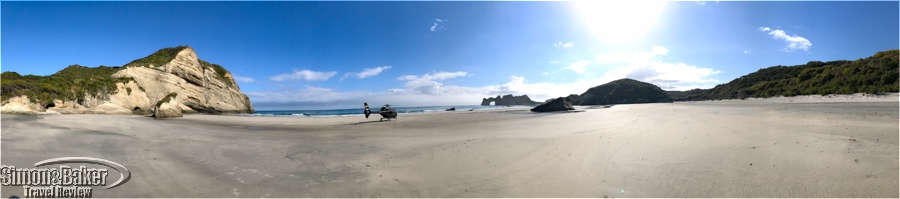
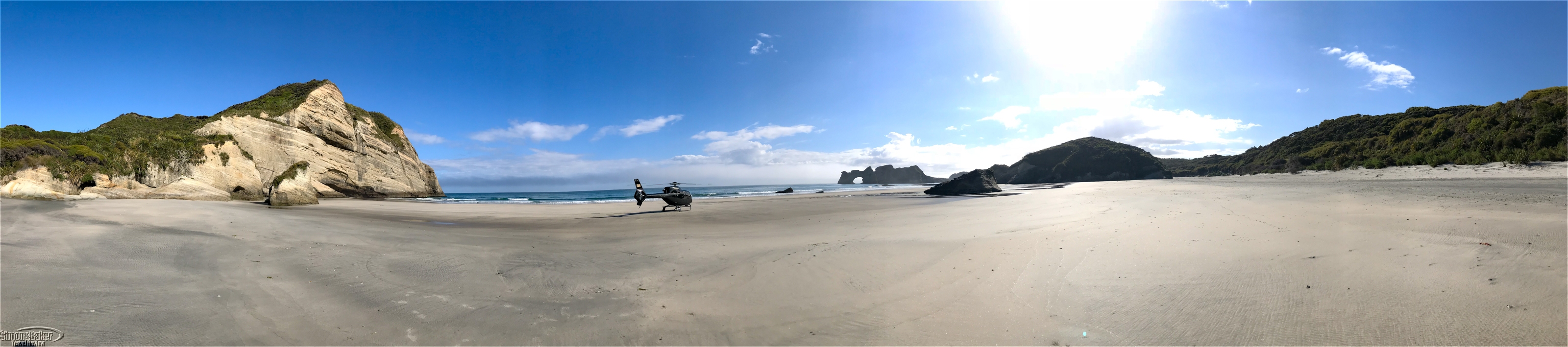
We were the only people at Wharariki Beach – click to expand to full size
Article and photos by Elena del Valle
My off the beaten track Intrepid tour of the South Island (Te Waipounamu) of New Zealand began in Nelson. I was originally supposed to fly from the Nelson airport to the Westhaven Retreat by helicopter following a domestic flight into Nelson. It would have been faster than the multi-hour drive. Most importantly we would soar above the popular Tasman National Park, the smallest national park in New Zealand and one of the most popular.
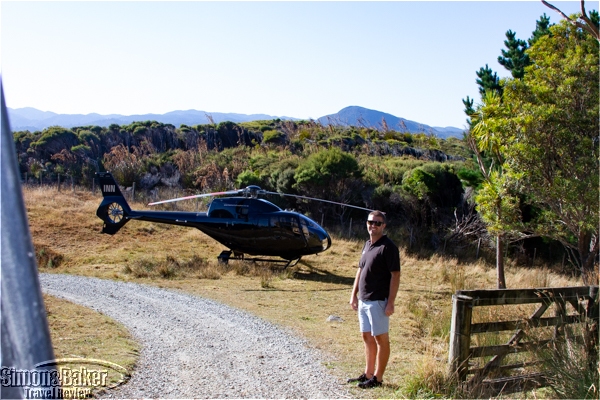
Pilot Logan Moore standing in front of the Eurocopter EC120 at Westhaven Retreat
When a series of wildfires broke out near Nelson I anticipated my helicopter flight would be cancelled and it was. While I enjoyed the drive with my guide (Veronika Vermeulen, owner, Aroha New Zealand Tours) because it allowed me to get to know her and see a bit of the country, I was disappointed at having missed the helicopter flight. Fortunately, Veronika found a work around.
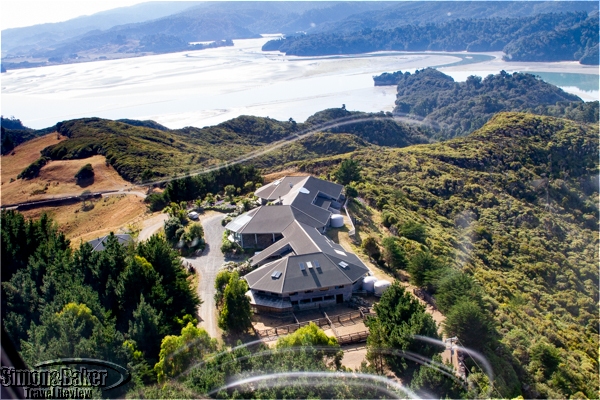
Our view of Westhaven Retreat as we departed
She scheduled the private Top of the South Tour on our departure. To make it possible on our departure day she left Westhaven Retreat early in the morning in the sports utility vehicle with our luggage. I stayed behind to enjoy a leisurely breakfast and the pretty ocean vistas. A few minutes after breakfast, from the expansive windows of the Westhaven dining room, I spotted a tiny metal bird approaching. In the blink of an eye the other guests and I watched it land on the nearby lawn.
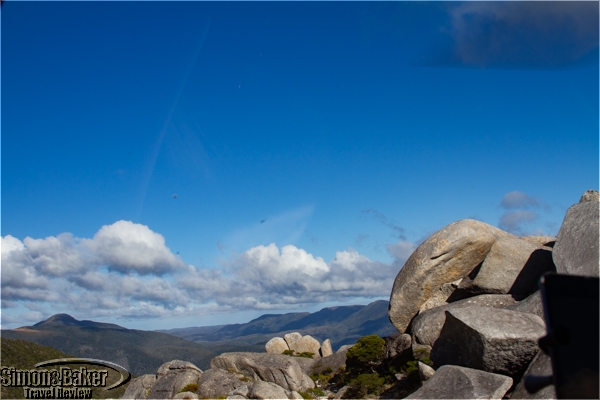
At the Mount Olympus Lord of the Rings film site
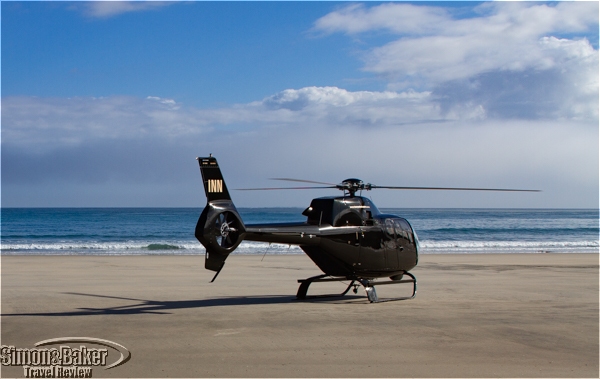
Within minutes Logan Moore, chief executive officer and pilot of Tasman Helicopters (Tangmere place, Nelson Airport www.tasmanhelicopters.co.nz, info@tasmanhelicopters.co.nz, 035288075) and I were airborne. From departure to arrival we didn’t see a soul. We flew in a Eurocopter EC120 built in 2008 with just over 2,000 flight hours and capacity for four passengers.
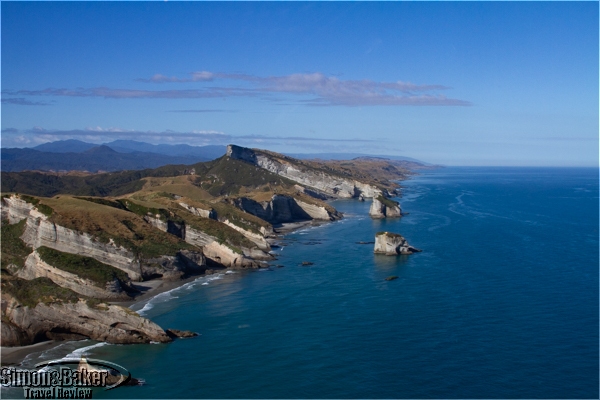
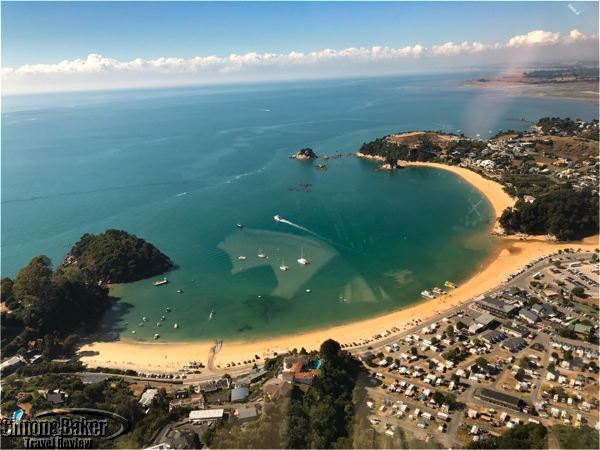
We flew over coastal areas, some isolated and some well populated
The 90-minute flight was one of the highlights of my trip to New Zealand. We stopped twice, at Wharariki Beach and at the Mount Olympus Lord of the Rings film site. I especially loved the dazzling beach stop. For a few minutes I had the impression we were the only humans for miles on the beautiful and unspoiled beach. Minutes later we landed in a rocky and hilly landscape. As soon as Logan identified which Lord of the Rings movie the film site belonged to I recognized it. The video clip on his tablet confirmed it.
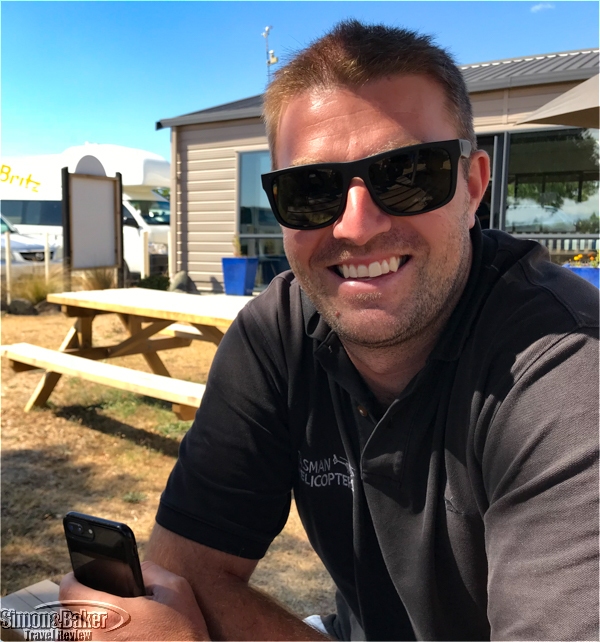
During a coffee break at Motueka Airport
Tasman Helicopters, co-owned by Ross Moore and Logan Moore, was established in 2015. According to Logan, who responded to questions by email, the company had no safety incidents.
Thanks to nice weather the scenery sparkled. The sky was clear and the flight was smooth, making time disappear faster than I anticipated. We landed at Motueka Airport, where my guide awaited me. As we continued on my tour memories of the flight lingered.
by Editor | Aug 15, 2016 | New Articles
By Scott S. Smith
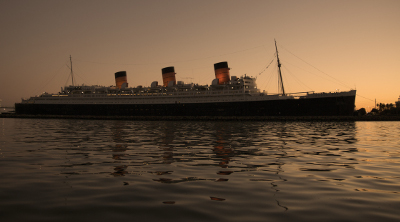
The Queen Mary at dusk from “Mighty Ship At War: The Queen Mary”*
I previewed the Smithsonian Channel’s new “Mighty Ship At War: The Queen Mary,” the engrossing tale of one of the greatest ocean liners favored by celebrities, which became a critical troop transport and Allied command center during World War II. It is now docked in the port of Long Beach, California, as a museum, special events venue, and luxury hotel (also featured prominently in this excellent documentary, produced by STV Productions for the Smithsonian Channel and BBC Scotland). The one-hour special, produced and directed by Matt Pinder to commemorate the 80 anniversary of the ship’s maiden voyage, will premiere Sunday, August 21, at 8 p.m. ET/PT.
It is a fascinating story of the most famous of the Cunard vessels. The documentary moves at a fast pace, balancing historic film and still photos with interviews of those who sailed or worked on it. Construction in Scottish shipyards in the early 1930s helped many survive the Great Depression. The naming ceremony for the largest and most powerful ship of its kind drew 250,000. It was moved to its home port of Southhampton, England, and sailed to New York City in May 1936 in just over four days. A floating palace with five dining areas, a grand ballroom, and a squash court, it was wildly popular for the next three years, favored by stars like Clark Gable and Marlene Dietrich and featuring entertainers such as Bob Hope.
As Nazi Germany became a threat, Jewish families fled Europe on the liner. Its last civilian voyage was in September 1939. Transformed into the largest and fastest troop transport, the 81,000 ton ship could carry up to 16,000, ultimately delivering over one million, including helping with the D-Day invasion. Hitler offered $250,000 to any U-Boat captain who could sink the 81,000 ton vessel. Aboard it Prime Minister Winston Churchill and the British high command planned strategy on the way to Allied conferences. As a journalist specializing in World War II, I found this part the most gripping, but no segment lasted too long.
After the war and refitting, the Queen Mary enjoyed two decades of glory, carrying an average of 1,000 passengers per voyage. But in 1965, with competition that could fly from London to New York in hours, it began losing money and its last Atlantic crossing came two years later. Over two million passengers had enjoyed its service as it sailed 3.8 million miles.
Long Beach opened the doors to tourists in 1971 and the Queen Mary has had its ups and downs under various managers. The latest firm recently announced an investment of $250 million in the area (I found the Russian submarine Scorpion and the Battleship Iowa nearby well worth visiting). None of these rough seas in retirement have dimmed the public’s fascination with the legendary vessel, which has attracted 50 million visitors. Among the draws are a chance to stay in the original 346 first-class suites, a five-star restaurant, a spa, special exhibits (currently on Princess Diana), a 4-D theater, and numerous tour options. I rate the documentary and the Queen Mary an A grade for anyone interested in the great ships which sailed through such important moments of our history.
*Photo courtesy Smithsonian Channel
by Editor | May 23, 2016 | New Articles, Restaurants
Article and photos by Elena del Valle
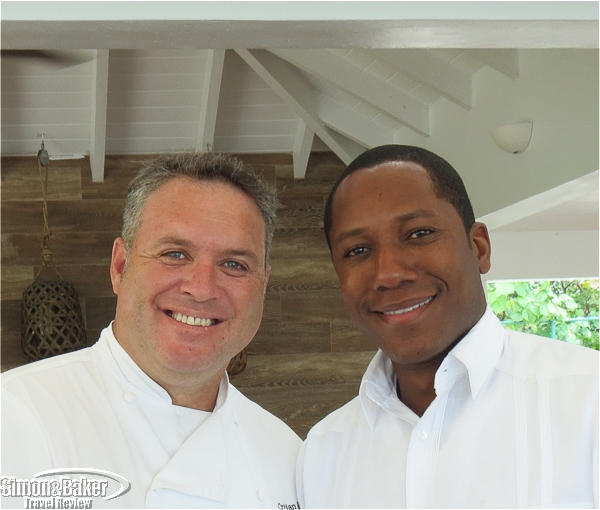
Cristian Rebolledo, executive chef, Kitchen218, and Francisco Hodge, manager, Food and Beverage at the Beach House in Providenciales, Turks and Caicos
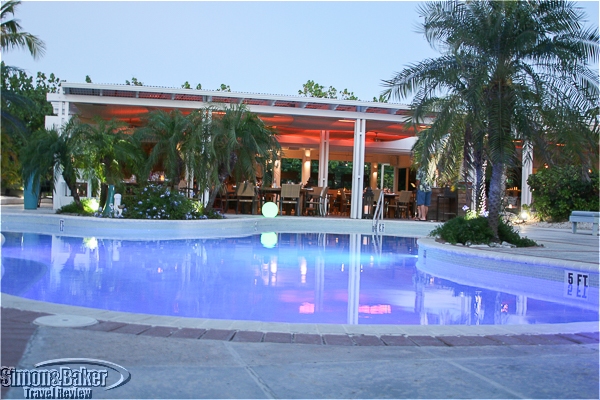
View of Kitchen218 from across the pool
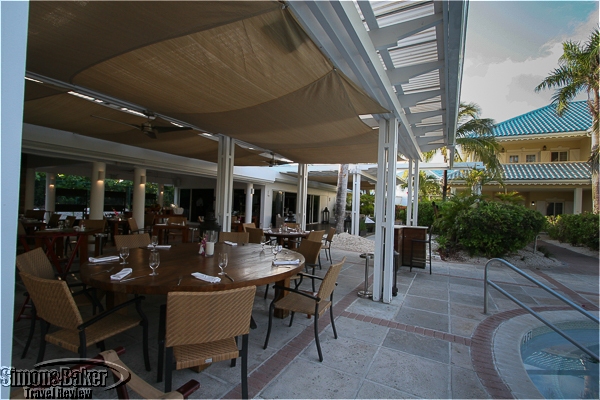
During my three night stay at the Beach House Turks and Caicos in Providenciales in the Turks and Caicos Islands of the British West Indies, owned and managed by Waterloo Hotel Management, I had an opportunity to sample the food at Kitchen218, the property restaurant with seating for 80 guests and 20 staff. In 2014, the company renovated and rebranded the restaurant with Contemporary Caribbean decor in a poolside setting.
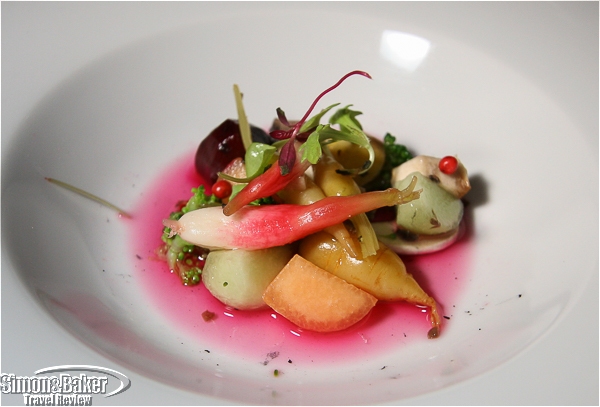
The first course was Veggie pickle cebiche and mushrooms
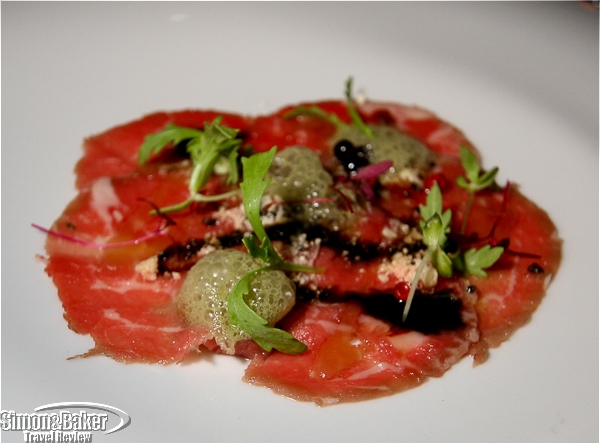
Beef carpaccio
I had breakfast thrice, lunch and dinner once each. For breakfast there was a small buffet option as well as a la carte choices. The delicately fried fresh snapper served whole with tasty and savory vegetables was a favorite. For my friends who enjoy conch I would recommend the slightly sweet conch salad, a house specialty.
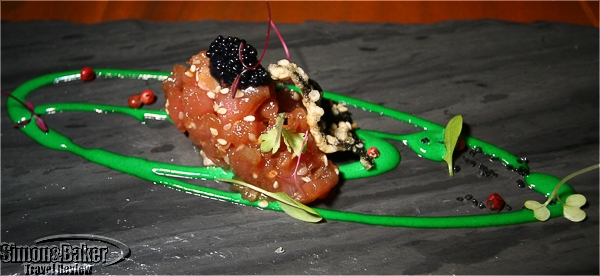
Tuna tartare with sesame seed lemsay dressing
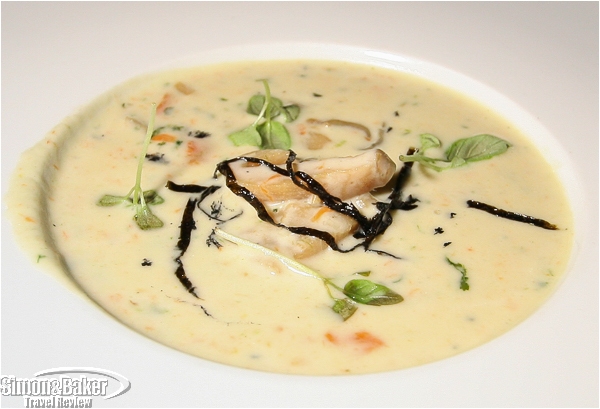
The Conch chowder was a favorite
It was at dinner that the chef’s contemporary fusion culinary talents shone brightest. The night I dined there I asked Cristian Rebolledo, executive chef of the restaurant, for a suggestion that emphasized local fresh products. After debating several options he recommended his seven course tasting menu and I agreed provided it was free of hot spices. He obliged. The tasting menu cost $110 and with a wine pairing it was $155.
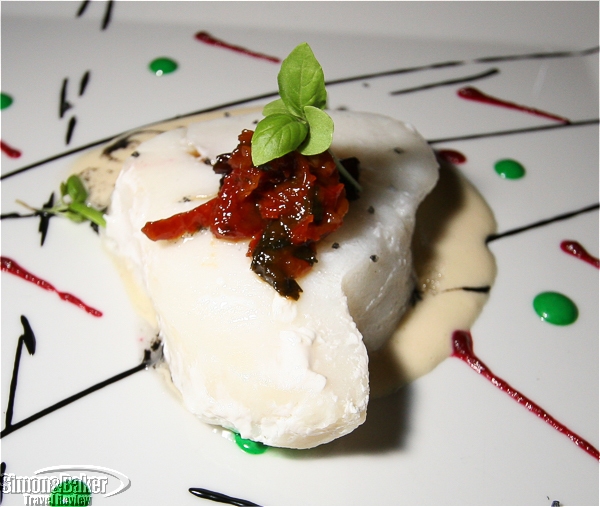
Sea bass Coin textures and veggies
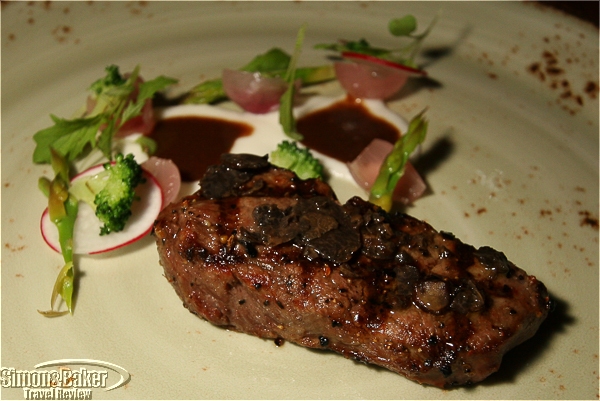
The Zen-Noh Waygu in dark sauce with veggies and figs was outstanding
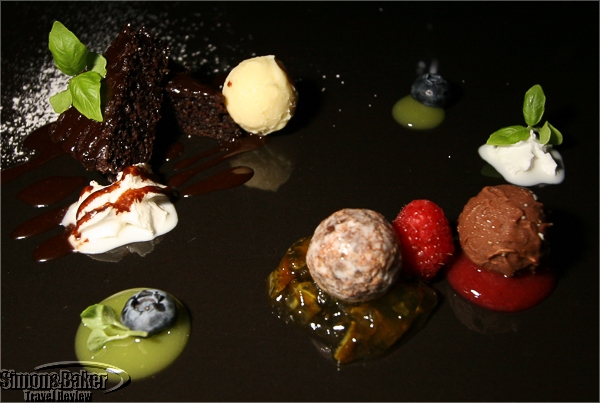
Chocolate Fantasy
His well prepared and well presented meal with wine pairing was one of the highlights of my visit to Providenciales. It consisted of: Veggie pickle cebiche and mushrooms served with 2014 Danzante pinot grigio from Italy, Tuna tartare (a favorite) with sesame seed lemsay dressing served with Matua non vintage pinot noir from New Zealand, Beef carpaccio served with 2013 Byron pinot noir from California, Conch chowder (a favorite) served with 2013 Muga Rioja from Spain, Sea bass Coin textures and veggies (not a favorite) served with 2013 JJ Vincent Bourgne Blanc from France, Zen-Noh Waygu in dark sauce with veggies and figs served with a 2014 Josh cellar cabernet sauvignon from Napa Valley (USA), and Chocolate Fantasy served with a non vintage Deviation late harvest from California (not a favorite). It was the perfect menu for a special occasion. Kitchen218 (Beach House Turk and Caicos, Lower Bight, Grace Bay, Providenciales, Turks and Caicos, +1.649.9465377218, www.beachhousetci.com, contact@beachhousetci.com) and the chef’s tasting menu will be at the top of my list of dining venues on any return trip to Providenciales.
by Editor | Apr 25, 2016 | Accomodations, Attractions, Ecotourism, New Articles
By Elena del Valle
Photos by Gary Cox
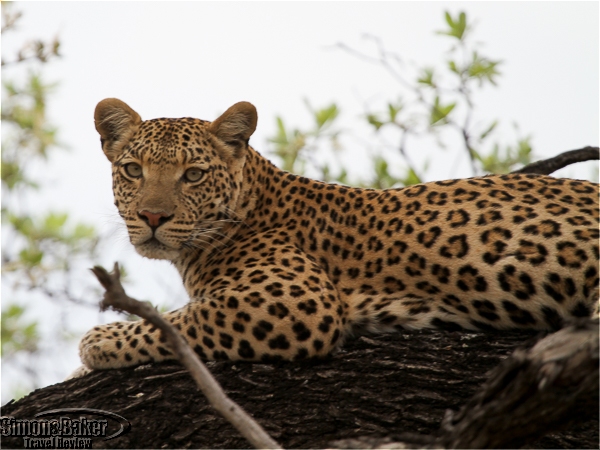
A leopard in a tree near Camp Moremi
On our most recent safari trip to Southern Africa we stayed at six Desert & Delta Safari properties, five in Botswana and one in the Caprivi Strip of Namibia. Traveling to properties within the same company offered advantages. The management similarities provided us an idea of what to expect before arriving at each subsequent property. For example, they all had eco-friendly policies; offered us moist refresher towels on arrival and when we returned from game drives as well as welcome back staff greetings when we returned from our activities; with only one exception, they all served buffet meals of similar styles at shared communal tables; the camps that depended on generators for electricity had battery operated lights for times when the generators were off at night; and most were run by a four-person management team, many of whom were friendly and helpful when asked.
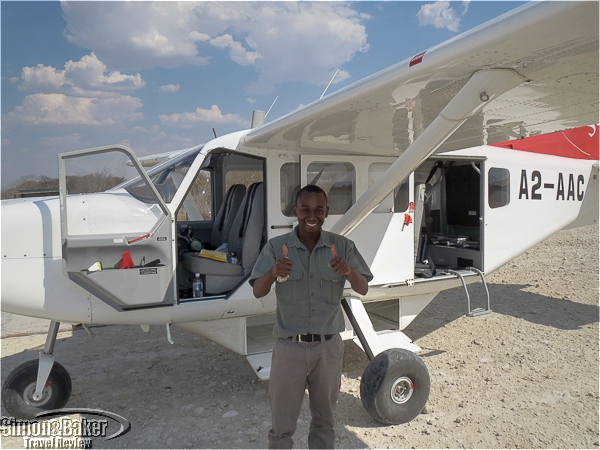
Our pilot bids us farewell after our arrival at Leroo La Tau from Maun to start the adventure
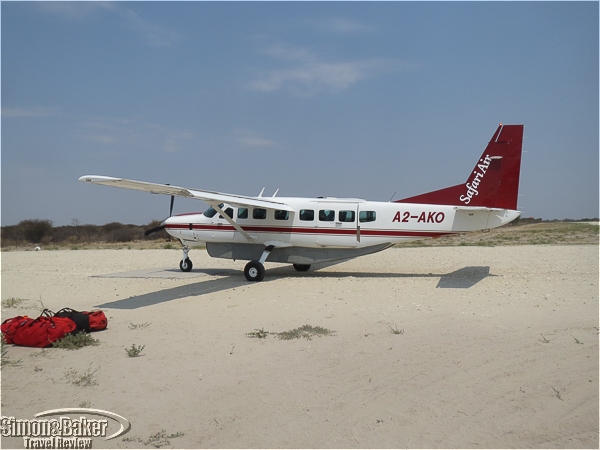
Safari Air had several comfortable Caravan aircraft
Another advantage of traveling to Desert & Delta Safaris properties was their shared charter air service. Since Chobe Holdings Limited owned Desert & Delta Safaris and Safari Air (Desert & Delta Safaris, Private bag 310, Maun, Botswana, +267 6861243, http://www.desertdelta.com, info@desertdelta.com), a non scheduled charter safari airline founded in 1992 and based out of Maun, they coordinated our transfers between the Desert & Delta Safaris properties and between our international arrival and departure airports. The company owned five GA8 Airvan, three Cessna Caravan and one Quest Kodiak. We appreciated the convenience of the well organized and on time service.
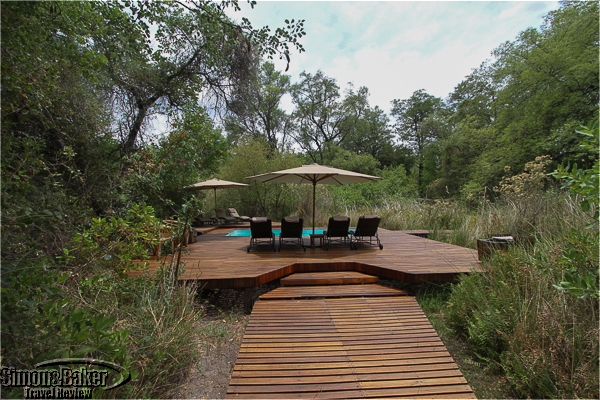
The heat drove many poolside in the afternoons
Our stay was hampered in part by a regional heat wave that stretched all the way to South Africa. Four of the six properties ran on generators. Because the rooms remained sealed most of the day they became over hot around the clock. More than once we or our fellow travelers became ill from the heat and dehydration. Thankfully, the game viewing vehicles had partial shade. In addition, wet face cloths and pool dips were helpful in reducing our body temperature.
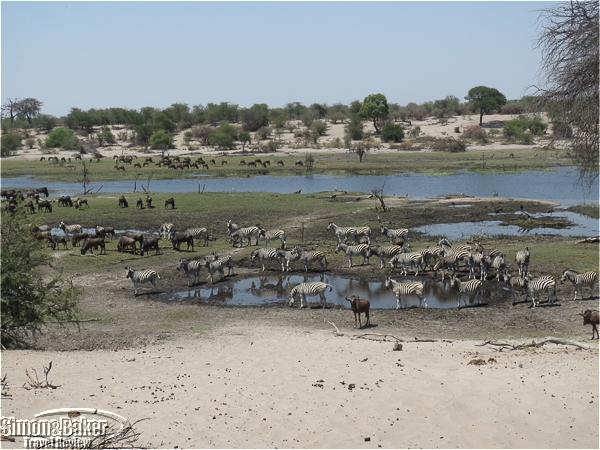
The wildlife was centered around the Boteti River banks near Leroo LaTau
Leroo LaTau, on the edge of the Makgadikgadi National Park, was our favorite for game viewing and views of the Boteti River from our rooms and the common areas. This was in part because Slade, our guide, was one of the most passionate and engaged of the guides we spent time with on that three country multi week itinerary. We enjoyed seeing a bit of the regional zebra migration and predators such as lions and wild dogs as well as brilliant sunsets over the shallow waters of the river.
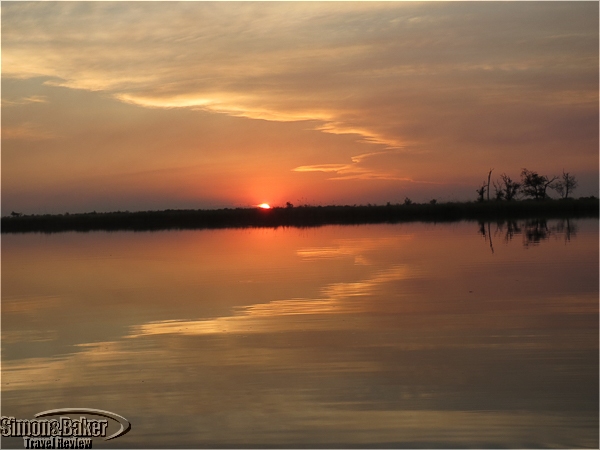
Sunset over the Okavango Delta
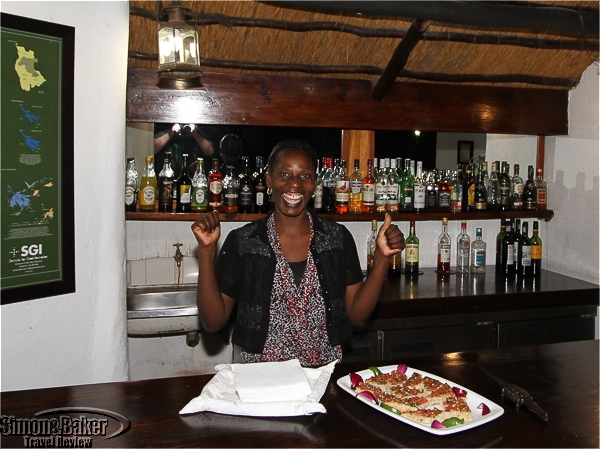
Time for a drink before dinner at Xugana Island Lodge
In Camp Moremi (see Tented camp offered good game viewing, creature comforts on edge of Okavango Delta) we liked the expansive views from the elevated deck. At Xugana Island Lodge, we delighted in the birding within the island, the sense of remoteness within the famous Okavango Delta, and pretty water setting as well as many boat outings and occasional hippo sightings. Savute Safari Lodge had the prettiest rooms and some of the tastiest and most abundant meals. We especially liked the views of the man made waterholes from the dining area and our tented rooms.
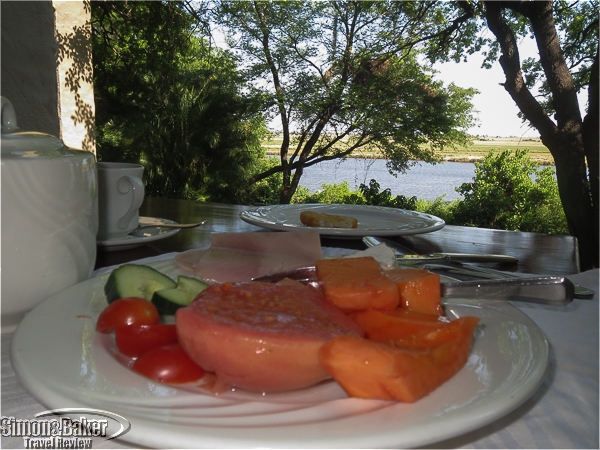
Breakfast at the Chobe Game Lodge with a view of the Chobe River
At the Chobe Savanna Lodge and Chobe Game Lodge, situated on opposite sides of the Chobe River and in separate countries, we were thankful for the air conditioned rooms. Although the border crossing from Botswana to Chobe Savanna Lodge on the Namibia side of the Chobe River was time consuming, hot and tedious we enjoyed the shady leisurely river rides on the pontoon boat. We particularly liked it when our boat was one of few on the river and we were alone with our local guide. The flat river water and quiet when the motor was off were particularly appealing. At the Chobe Game Lodge, we appreciated the three daily game viewing activities, and luxury amenities such as plated meals at private tables, in-room phones, WiFi internet access, work out room, spa room and its innovative electric safari vehicle.
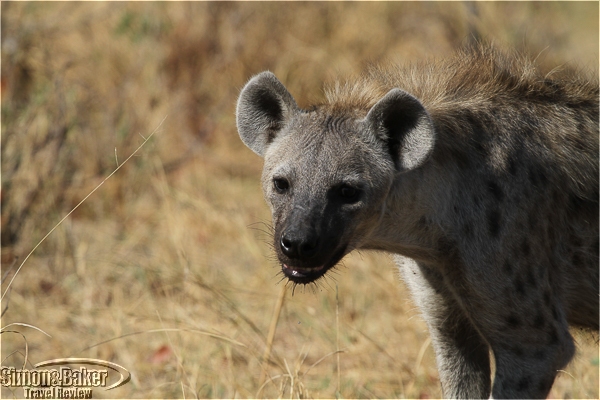
A hyena in the Chobe Game Reserve
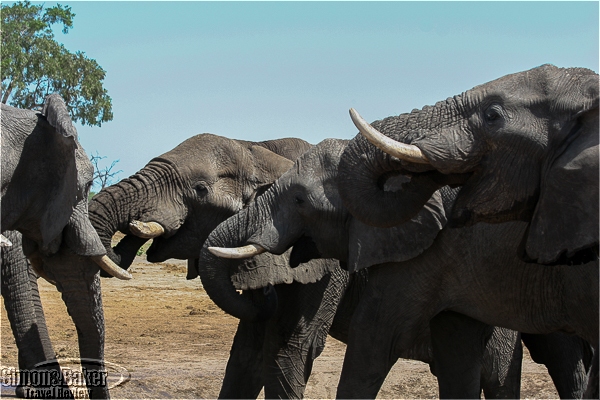
Elephants sharing a waterhole near Savute Safari Lodge in Chobe
Overall we had a fun trip and numerous bird and wildlife sightings of common species such as zebra, wildebeest, giraffe, impala, red lechwe (at Xugana), including elephant, buffalo, leopard and lion from the coveted Big Five. We saw beautiful birds, including the elusive paradise flycatchers, fish eagles multiple times, and particularly remember pairs of fish eagles relatively close to our boat at the Chobe Savanna Lodge. During the trip, we had extraordinary sightings such as wild dogs at Leroo La tau, crocodiles hunting, interactions between lions and elephants and numerous striking landscape and waterscape moments that will linger in our memories for years to come, and draw us back to Botswana and Africa in the future.
by Editor | Mar 7, 2016 | Accomodations, Ecotourism, Luxury Travel, New Articles
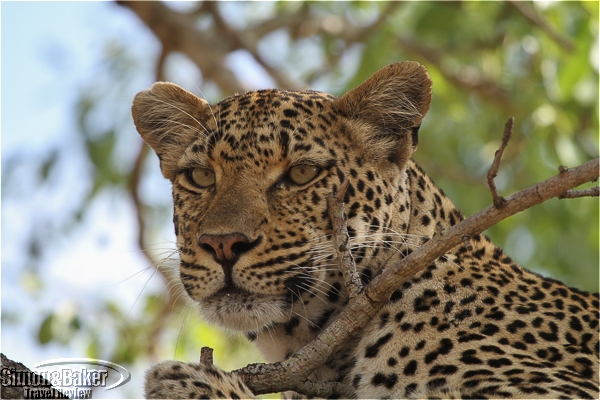
A leopard in a tree during a game drive at Rattray’s on MalaMala
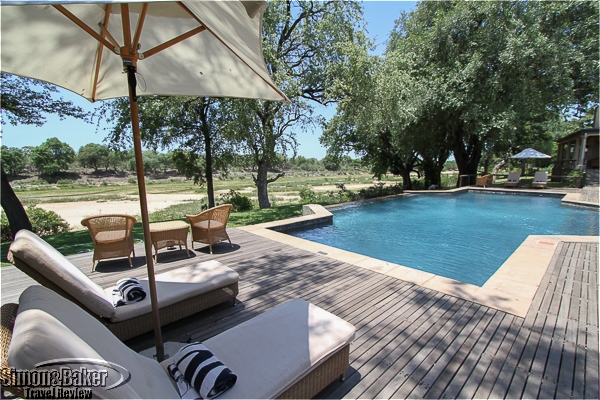
The pool at Ratttray’s had a view of the dry river bed
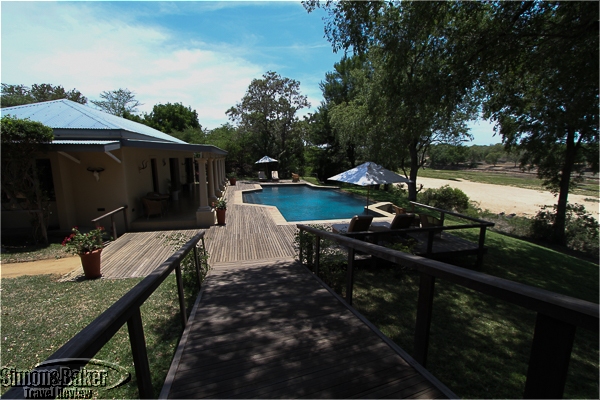
When on safari the repetitive cycle of daily game drives and copious meals can leave us tired without the healthful benefits of exercise. On our most recent itinerary featuring safari properties in Botswana, Namibia and South Africa two lodges stood out for their fitness and pool features. Both lodges, within the Sabi Sand Reserve, a private reserve adjacent to South Africa’s Kruger National Park, had private plunge pools in the rooms as well as a main area swimming pool large enough to swim short laps.
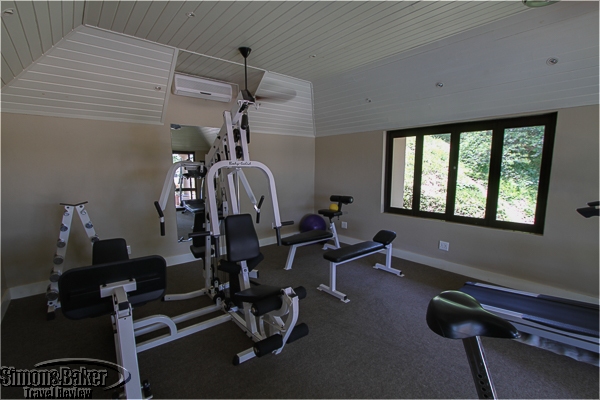
The exercise room at Rattray’s
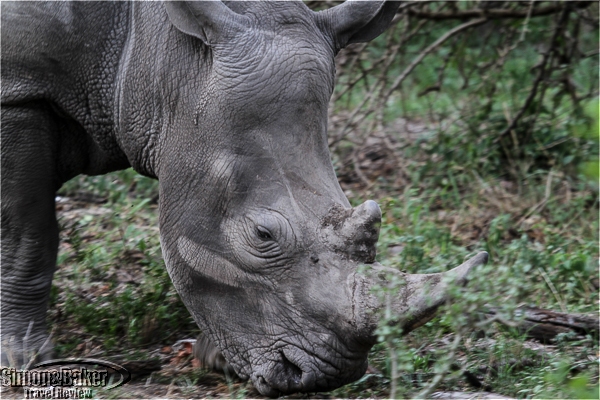
A white rhino during a game drive at Rattray’s
In the Mala Mala Reserve, Rattray’s on MalaMala had a dedicated fitness room for guests with exercise equipment and a few weights. Next to the fitness room there was a sauna. In front of the fitness room there was a swimming pool. Both had expansive views of the lawn and dry river bed. In addition, there were private plunge pools on the river facing deck of each spacious room.
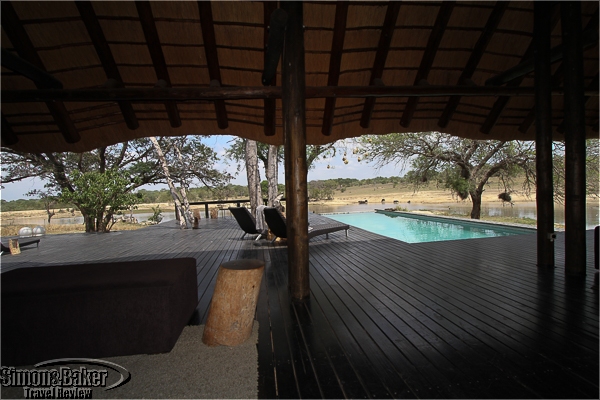
The main pool at Chitwa Chitwa Private Game Lodge faced a dam
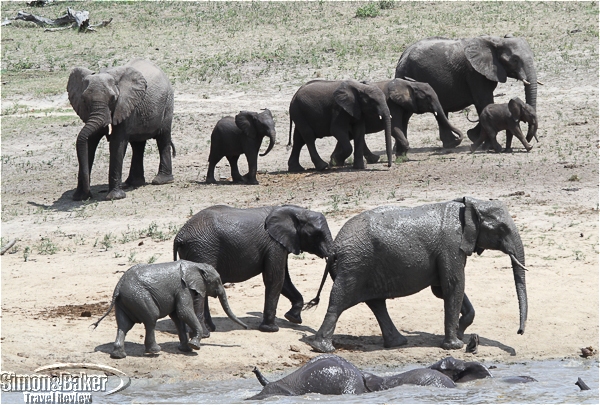
From the pool deck we observed elephants visiting the dam
Chitwa Chitwa Private Game Lodge, in the northern end of Sabi Sand Reserve, also had a dedicated workout room with electric exercise machines. The art filled sunlit room with glass walls was adjacent to the property’s dedicated spa treatment room. Guest rooms had private decks with bush and dam views as well as plunge pools. In the main area, there was a rimless swimming pool facing the property dam.
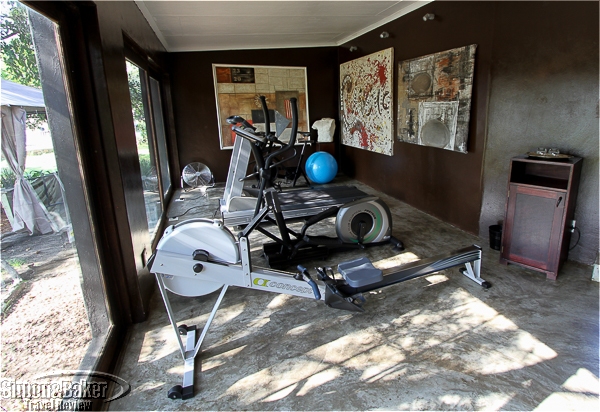
The exercise room at Chitwa Chitwa
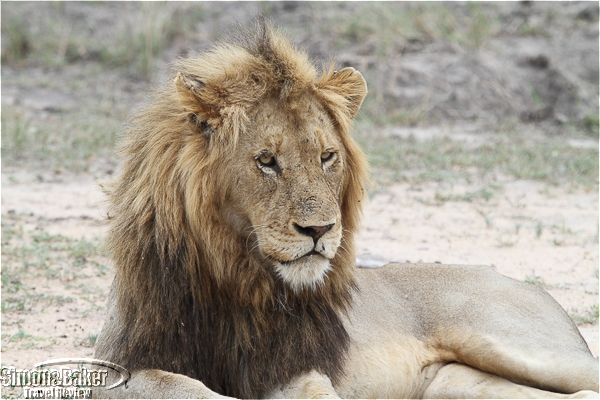
A lion seen during a game drive at Chitwa Chitwa
by Editor | Nov 9, 2015 | Attractions, New Articles
Article and photos by Josette King
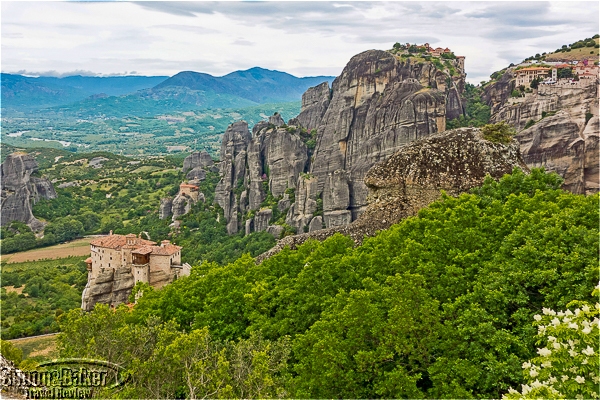
Meteora Monasteries – from left to right, Rousanou, Saint Nicholas, Varlaam and Great Meteoron
I first heard of the monasteries of Meteora (Greek for suspended in the air) some 40 years ago and immediately resolved that I must visit, someday. The year was 1975. The military dictatorship that had cast a pall upon Greece for seven years had finally ended and adventurous tourists had begun to return. A friend was telling me of her summer of wandering to the far reaches of the Thessalian Plain and coming upon a surreal landscape of sandstone pinnacles thousands of feet in height topped by fortified medieval monasteries. Built from the 14th to 16th centuries, they were one of the largest monastic complexes in Greece. Of the original 24, only six monasteries remained and were still home to small religious communities. There were no roads or other visible means of access, but she and her traveling companion had managed to visit. Area villagers had suggested they approached the monks who came down for supplies every few days. Chances were they would be allowed to go. Two days later, they were hoisted some 400 meters (1300 feet) above the plain in a basket akin to a small hot air balloon gondola attached to a sturdy rope to the Grand Meteoron Monastery (a.k.a. Monastery of the Configuration of Christ). There, a kind brother who spoke a bit of English gave them a tour of the courtyard and common areas, including a church with fascinating and remarkably well preserved post Byzantine frescoes.
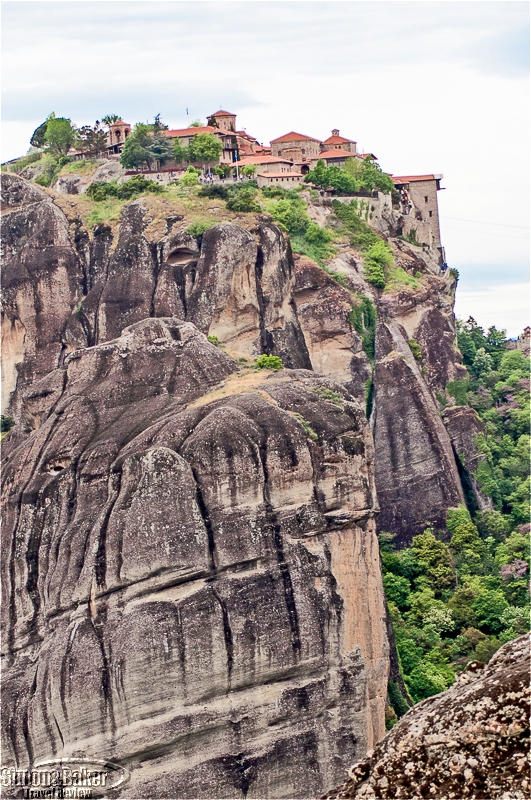
The Monastery of Great Meteoron
It took four decades but the opportunity finally arose for me to keep my promise to myself, in the form of an Athens to Pindus Mountains 4 x 4 Tour with Tripology Adventures. It ended at the place where the foothills of the Pindus meet the northwestern corner of the Thessalian Plain, Meteora. Tripology is an adventure travel company that leads self-drive caravans into remote, history rich areas of the Mediterranean Basin and beyond. While the powerful 4 x 4s that had been a must to see us through the unpaved mountain trails of the Pindus were not technically necessary there, they did come in handy on the steep access road that had replaced the basket ascension of old to reach to the monasteries.
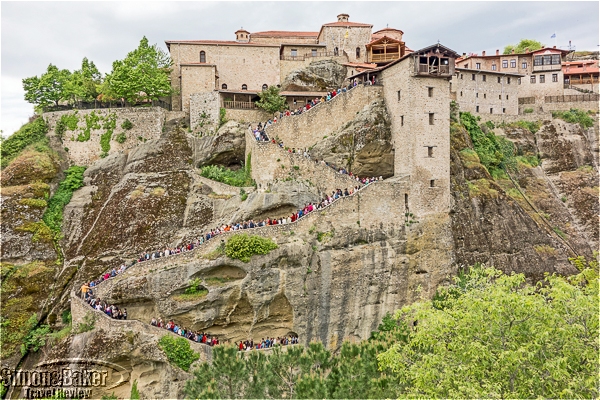
Today’s visitors access Great Meteoron via a narrow stairway
Much has changed since my friend’s visit. The Meteora complex is no longer a well-kept secret. Even before UNESCO declared it a World Heritage Site in 1988, it had already enjoyed its moment in the limelight when James Bond tracked villains to the Holly Trinity Monastery for the scenic suspense ending of his 1981 caper “For Your Eyes Only.” More recently, roads have been constructed up nearby hills with footbridges over the chasms. Visitors walk across to reach steep stone stairways that lead to entrances cut into the fortification walls. With the development of mass tourism, Meteora has become one of the most visited historic sites in Greece. And Kalambaka, the sleepy village where my friend had waited for the monks to show up, is now a thriving modern tourist town. But I enjoyed my comprehensive tour of Great Meteoron, the oldest (established around 1340) as well as the highest of the existing monasteries. With only three monks remaining in residence, most of common areas such as the original kitchen, pantry, wine cellar, refectory and the artifacts of everyday life they still hold have become museum exhibits.
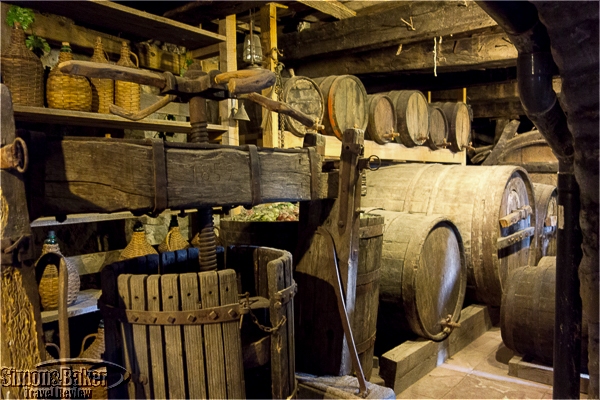
The ancient wine cellar at Great Meteoron
Due to their unassailable location, these remote religious centers had become an academic and artistic safe heaven that kept Hellenic culture and traditions alive during the four centuries of Ottoman occupation of Greece from the mid 15th century to 1821. The Great Meteoron katholikon (orthodox equivalent to a conventual church in Western Christianity), the Church of the Transfiguration that was built in 1388 in the Greek square cross floor plan and topped with an unusual twelve sided dome and the nave and narthex added in 1545 are prime examples of the curatorial importance of the site. The icons adorning the sanctuary trace back to the 14th to 16th centuries. The frescoes of the katholikon, painted in the late 15th century, are in the Macedonian style. They depict the Virgin Enthroned and multiple scenes from the life of Christ, including images of Christ Pantocrator (reminiscent of early Christian mosaics in Istanbul’s Agia Sophia). The nave and narthex frescoes, painted in 1552 in the more rigid style of the Cretan school, recount the early gospels as well the gruesome martyrdom of early saints. They also include portraits of the monastery’s founders Athanasios and Ioajph. In addition to their artistic and historic documentary importance, it was a thrill to see ancient frescoes that had been so well protected by their isolated environment that they were still in their original state and in remarkable condition.
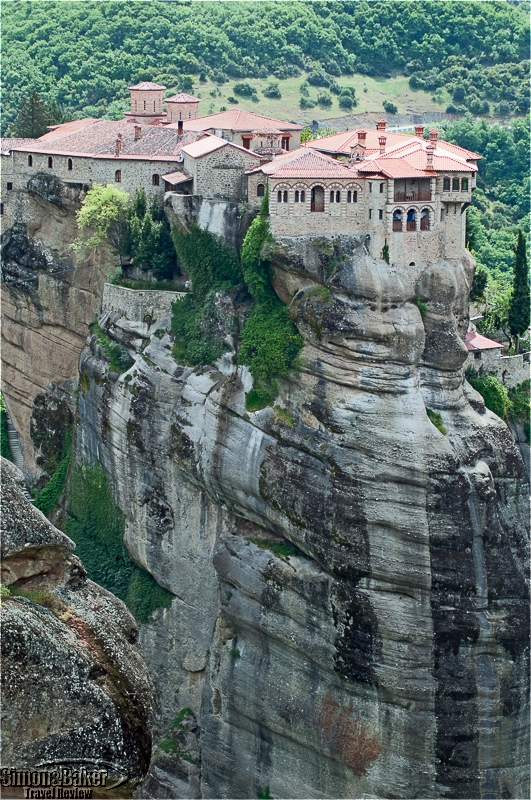
The Monastery of Varlaam
My visit ended with a quiet moment in the shaded courtyard, taking in the dramatic views of the nearby pinnacles and the valley beyond. Despite their world fame, the monasteries serenely go on standing guard, suspended in the sky as they have for over half a millennium. A breathtaking sight that alone would have made it worth my decades long wait.